Search This Blog

In search of Technetium

In search of Technetium

In 1937, A plate of molybdenum metal arrived at Palermo University in Sicily, Italy. From the University of California Berkeley. This discovery was one of the most important disciplines of chemistry in the 37-inch particle accelerating mechanism of the name of an astronomer, Ernst Lawrence's Atom smasher.

technetium 99, what is technetium used for, technetium isotopes, technetium periodic table, who discovered technetium, ruthenium, promethium, technetium 99, technetium 99m, re in periodic table, ru periodic table, element 61, what is technetium used for, technetium periodic table, carlo perrier, cd on the periodic table, periodic table, only science, onlyscience 360, nadim, 1, 2, 3, 4, 5, 6, 7, 8, 9, 0
Technetium
The 43rd element was in the empty space of the period table of Dmitry Mendeleev. It is said to be one-manganese due to the manganese's religion. Dmitry Mendeleev created his periodic table according to the mass of the first elemental particle and according to the molecule's behavior with other elements. But to do that, there was a lot of space got left for many unexplained elements. Gradually, according to Mendeleev's prediction, many elements filed those empty spaces without 43rd space.

At that time Emilio Segre, a 32-year-old young scientist working in the Palermo University of Italy. Earlier, working with the prominent scientist Enrico Fermi. With a limited budget, a machine manufactured in the period of time, Fermi's team added new sections to the periodic table of Mendeleev.

technetium 99, what is technetium used for, technetium isotopes, technetium periodic table, who discovered technetium, ruthenium, promethium, technetium 99, technetium 99m, re in periodic table, ru periodic table, element 61, what is technetium used for, technetium periodic table, carlo perrier, cd on the periodic table, periodic table, only science, onlyscience 360, nadim, 1, 2, 3, 4, 5, 6, 7, 8, 9, 0   
Glenn Seaborg was 26
Meanwhile, Frederick and Irene Julio Kuri in France showed that radioactive radiation could help transform an element to another element. Madame Curie and Pierre Kurier's son Irene Kurie. She got Noble at chemistry for this discovery in 1935 with husband Frederick Julio Kuri. Segrei thought Lawrence might have created the new element in the particle accelerating device Unknowingly. Lawrence was using 42 atomic numbers, Molybdenum. If the nucleus of a hydrogen atom merges with it, only then the 43rd element can be found. Segre's thought that Lawrence had hit Molybdenum continuously with Hydrogen's Isotope Deuterium. As a result, only a few one-manganese were made in the molybdenum plate. Segre wrote a letter asking for more samples from Lawrence. Lawrence had a little of manganese left, and he sent it happily. With colleague Carlo Perrier, Segre started experimenting on the manganese. The 43rd element was extracted by boiling the sample with Sodium peroxide and hydrogen peroxide. 43 Number single-manganese's half-life was several million years. But the age of the earth is 5 billion years old. So, even if there were some siManganeseanise at the beginning of the earth, almost all of them have now turned into other particles in radioactive erosion. That's why this element is not available naturally. Ten years after the discovery, the name of single-manganese was named Technicianium in 1947. The name comes from the Greek word Technoos. The meaning of Technoos is artificial. Till then Mendeleev's remaining spaces of the periodic table are also completed. Segre later played an important role in the discovery of the element Astatine 85. This invention was the breakthrough and the pioneer of heavy elemental discovery. In 1939, American scientist Edwin McMillan created the 93rd Elemental, Neptunium in the Berkeley Radiation Lab. In February of 1941, Glenn Sieberg made the 94th element. Laboratory With the help of Segre, Seaborg proved that his invention was actually plutonium, which could be used to make a nuclear bomb. Siborg created more than nine elements artificially. In his honor, the 106th element was named Seaborgiumm.

 On the way of the discovery of Technetium, the periodic table has reached the 118th Elemental Oganasion. These new elements are useful in any way that nobody imagined. Smoke detector equipment, from spacecraft fuel to terrible weapons. However, the best inventions title was of Technetium and his six-hour half-life Isotopes. Segre and Siborg made this Isotop. 80 percent of the ingredients used in nuclear medicine in the world were Radioactive Isotope technetium.

Stephen Hawking

stephen hawking books, stephen hawking movie, stephen hawking wife, stephen hawking biography, stephen hawking children, stephen hawking disease, stephen hawking wikipedia, stephen hawking family, lucy hawking, stephen hawking books, stephen hawking quotes, stephen hawking wife, stephen hawking net worth, what did stephen hawking discover, stephen hawking achievements, stephen hawking theory of everything, the grand design book my brief history stephen hawking education, stephen hawking image, stephen hawking movies and tv shows, interesting facts about stephen hawking, only Science, Science, Nadim, 0, 1, 2, 3, 4, 5, 6, 7, 8, 9, Stephen Hawking, in full Stephen William Hawking, (born January 8, 1942, Oxford, Oxfordshire, England—died March 14, 2018, Cambridge, Cambridgeshire), English theoretical physicist whose theory of exploding black holes drew upon both relativity theory and quantum mechanics. He also worked with space-time singularities
Stephen Hawking


Stephen Hawking, in full Stephen William Hawking, (born January 8, 1942, Oxford, Oxfordshire, England—died March 14, 2018, Cambridge, Cambridgeshire), English theoretical physicist whose theory of exploding black holes drew upon both relativity theory and quantum mechanics. He also worked with space-time singularities.

Hawking studied physics at University College, Oxford (B.A., 1962), and Trinity Hall, Cambridge (Ph.D., 1966). He was elected a research fellow at Gonville and Caius College at Cambridge. In the early 1960s, Hawking contracted amyotrophic lateral sclerosis, an incurable degenerative neuromuscular disease. He continued to work despite the disease’s progressively disabling effects.

Hawking worked primarily in the field of general relativity and particularly on the physics of black holes. In 1971 he suggested the formation, following the big bang, of numerous objects containing as much as one billion tons of mass but occupying only the space of a proton. These objects, called mini black holes, are unique in that their immense mass and gravity require that they be ruled by the laws of relativity, while their minute size requires that the laws of quantum mechanics apply to them also. In 1974 Hawking proposed that, in accordance with the predictions of quantum theory, black holes emit subatomic particles until they exhaust their energy and finally explode. Hawking’s work greatly spurred efforts to theoretically delineate the properties of black holes, objects about which it was previously thought that nothing could be known. His work was also important because it showed these properties’ relationship to the laws of classical thermodynamics and quantum mechanics.


Hawking’s contributions to physics earned him many exceptional honors. In 1974 the Royal Society elected him one of its youngest fellows. He became a professor of gravitational physics at Cambridge in 1977, and in 1979 he was appointed to Cambridge’s Lucasian professorship of mathematics, a post once held by Isaac Newton. Hawking was made a Commander of the British Empire (CBE) in 1982 and a Companion of Honour in 1989. He also received the Copley Medal from the Royal Society in 2006 and the U.S. Presidential Medal of Freedom in 2009. In 2008 he accepted a visiting research chair at the Perimeter Institute for Theoretical Physics in Waterloo, Ontario, Canada.

His publications include The Large Scale Structure of Space-Time (1973; coauthored with G.F.R. Ellis), Superspace and Supergravity (1981), The Very Early Universe (1983), and the best sellers A Brief History of Time: From the Big Bang to Black Holes (1988), The Universe in a Nutshell (2001), A Briefer History of Time (2005), and The Grand Design (2010; coauthored with Leonard Mlodinow).


Collected: Wikipedia

Thomas Edison

Thomas Edison

Thomas Edison Early life Thomas as a boy Thomas Edison was born, in 1847, in Milan, Ohio, and grew up in Port Huron, Michigan. He was the seventh and last child of Samuel Ogden Edison Jr. (1804–1896, born in Marshalltown, Nova Scotia) and Nancy Matthews Elliott (1810–1871, born in Chenango County, New York). His father, the son of a Loyalist refugee, had moved as a boy with the family from Nova Scotia, settling in southwestern Ontario (then called Upper Canada), in a village known as Shewsbury, later Vienna, by 1811. Samuel Jr. eventually fled Ontario, because he took part in the unsuccessful Mackenzie Rebellion of 1837. His father, Samuel Sr., had earlier fought in the War of 1812 as captain of the First Middlesex Regiment. By contrast, Samuel Jr.'s struggle found him on the losing side, and he crossed into the United States at Sarnia-Port Huron. Once across the border, he found his way to Milan, Ohio. His patrilineal family line was Dutch by way of New Jersey; the surname had originally been "Edeson." thomas edison inventions, thomas edison quotes, thomas edison light bulb, thomas edison facts,thomas edison biography, thomas edison children, thomas edison education, thomas edison family, thomas alva edison jr, TMBM Nadim, The Science, the science all

Early life


Thomas Edison Early life Thomas as a boy Thomas Edison was born, in 1847, in Milan, Ohio, and grew up in Port Huron, Michigan. He was the seventh and last child of Samuel Ogden Edison Jr. (1804–1896, born in Marshalltown, Nova Scotia) and Nancy Matthews Elliott (1810–1871, born in Chenango County, New York). His father, the son of a Loyalist refugee, had moved as a boy with the family from Nova Scotia, settling in southwestern Ontario (then called Upper Canada), in a village known as Shewsbury, later Vienna, by 1811. Samuel Jr. eventually fled Ontario, because he took part in the unsuccessful Mackenzie Rebellion of 1837. His father, Samuel Sr., had earlier fought in the War of 1812 as captain of the First Middlesex Regiment. By contrast, Samuel Jr.'s struggle found him on the losing side, and he crossed into the United States at Sarnia-Port Huron. Once across the border, he found his way to Milan, Ohio. His patrilineal family line was Dutch by way of New Jersey; the surname had originally been "Edeson." thomas edison inventions, thomas edison quotes, thomas edison light bulb, thomas edison facts,thomas edison biography, thomas edison children, thomas edison education, thomas edison family, thomas alva edison jr, TMBM Nadim, The Science, the science all

Thomas as a boy
Thomas Edison was born, in 1847, in Milan, Ohio, and grew up in Port Huron, Michigan. He was the seventh and last child of Samuel Ogden Edison Jr. (1804–1896, born in Marshalltown, Nova Scotia) and Nancy Matthews Elliott (1810–1871, born in Chenango County, New York). His father, the son of a Loyalist refugee, had moved as a boy with the family from Nova Scotia, settling in southwestern Ontario (then called Upper Canada), in a village known as Shewsbury, later Vienna, by 1811. Samuel Jr. eventually fled Ontario, because he took part in the unsuccessful Mackenzie Rebellion of 1837. His father, Samuel Sr., had earlier fought in the War of 1812 as captain of the First Middlesex Regiment. By contrast, Samuel Jr.'s struggle found him on the losing side, and he crossed into the United States at Sarnia-Port Huron. Once across the border, he found his way to Milan, Ohio. His patrilineal family line was Dutch by way of New Jersey; the surname had originally been "Edeson."

Edison only attended school for a few months and was instead taught by his mother. Much of his education came from reading R.G. Parker's School of Natural Philosophy and The Cooper Union for the Advancement of Science and Art.

Edison developed hearing problems at an early age. The cause of his deafness has been attributed to a bout of scarlet fever during childhood and recurring untreated middle-ear infections. Around the middle of his career, Edison attributed the hearing impairment to being struck on the ears by a train conductor when his chemical laboratory in a boxcar caught fire and he was thrown off the train in Smiths Creek, Michigan, along with his apparatus and chemicals. In his later years, he modified the story to say the injury occurred when the conductor, in helping him onto a moving train, lifted him by the ears.


Early career

Edison's family moved to Port Huron, Michigan, after the canal owners successfully kept the railroad out of Milan Ohio in 1854 and business declined. Edison sold candy and newspapers on trains running from Port Huron to Detroit, and sold vegetables. He became a telegraph operator after he saved three-year-old Jimmie MacKenzie from being struck by a runaway train. Jimmie's father, station agent J. U. MacKenzie of Mount Clemens, Michigan, was so grateful that he trained Edison as a telegraph operator. Edison's first telegraphy job away from Port Huron was at Stratford Junction, Ontario, on the Grand Trunk Railway. He was held responsible for a near collision. He also studied qualitative analysis and conducted chemical experiments on the train until he left the job.

Edison obtained the exclusive right to sell newspapers on the road, and, with the aid of four assistants, he set in type and printed the Grand Trunk Herald, which he sold with his other papers. This began Edison's long streak of entrepreneurial ventures, as he discovered his talents as a businessman. These talents eventually led him to found 14 companies, including General Electric, still one of the largest publicly traded companies in the world.

In 1866, at the age of 19, Edison moved to Louisville, Kentucky, where, as an employee of Western Union, he worked the Associated Press bureau news wire. Edison requested the night shift, which allowed him plenty of time to spend at his two favorite pastimes—reading and experimenting. Eventually, the latter pre-occupation cost him his job. One night in 1867, he was working with a lead–acid battery when he spilled sulfuric acid onto the floor. It ran between the floorboards and onto his boss's desk below. The next morning Edison was fired.

One of his mentors during those early years was a fellow telegrapher and inventor named Franklin Leonard Pope, who allowed the impoverished youth to live and work in the basement of his Elizabeth, New Jersey, home. Some of Edison's earliest inventions were related to telegraphy, including a stock ticker. His first patent was for the electric vote recorder, U.S. Patent 90,646, which was granted on June 1, 1869.

Menlo Park laboratory (1876-1886)

Research and development facility


Thomas Edison Early life Thomas as a boy Thomas Edison was born, in 1847, in Milan, Ohio, and grew up in Port Huron, Michigan. He was the seventh and last child of Samuel Ogden Edison Jr. (1804–1896, born in Marshalltown, Nova Scotia) and Nancy Matthews Elliott (1810–1871, born in Chenango County, New York). His father, the son of a Loyalist refugee, had moved as a boy with the family from Nova Scotia, settling in southwestern Ontario (then called Upper Canada), in a village known as Shewsbury, later Vienna, by 1811. Samuel Jr. eventually fled Ontario, because he took part in the unsuccessful Mackenzie Rebellion of 1837. His father, Samuel Sr., had earlier fought in the War of 1812 as captain of the First Middlesex Regiment. By contrast, Samuel Jr.'s struggle found him on the losing side, and he crossed into the United States at Sarnia-Port Huron. Once across the border, he found his way to Milan, Ohio. His patrilineal family line was Dutch by way of New Jersey; the surname had originally been "Edeson." thomas edison inventions, thomas edison quotes, thomas edison light bulb, thomas edison facts,thomas edison biography, thomas edison children, thomas edison education, thomas edison family, thomas alva edison jr, TMBM Nadim, The Science, the science all
Edison's Menlo Park Laboratory, reconstructed at Greenfield Village at Henry Ford Museum in Dearborn, Michigan.
Edison's major innovation was the establishment of an industrial research lab in 1876. It was built in Menlo Park, a part of Raritan Township (now named Edison Township in his honor) in Middlesex County, New Jersey, with the funds from the sale of Edison's quadruplex telegraph. After his demonstration of the telegraph, Edison was not sure that his original plan to sell it for $4,000 to $5,000 was right, so he asked Western Union to make a bid. He was surprised to hear them offer $10,000 ($216,300 in today's dollars.), which he gratefully accepted. The quadruplex telegraph was Edison's first big financial success, and Menlo Park became the first institution set up with the specific purpose of producing constant technological innovation and improvement. Edison was legally attributed with most of the inventions produced there, though many employees carried out research and development under his direction. His staff was generally told to carry out his directions in conducting research, and he drove them hard to produce results.

William Joseph Hammer, a consulting electrical engineer, started working for Edison and began his duties as a laboratory assistant in December 1879. He assisted in experiments on the telephone, phonograph, electric railway, iron ore separator, electric lighting, and other developing inventions. However, Hammer worked primarily on the incandescent electric lamp and was put in charge of tests and records on that device (see Hammer Historical Collection of Incandescent Electric Lamps). In 1880, he was appointed chief engineer of the Edison Lamp Works. In his first year, the plant under General Manager Francis Robbins Upton turned out 50,000 lamps. According to Edison, Hammer was "a pioneer of incandescent electric lighting". Frank J. Sprague, a competent mathematician and former naval officer, was recruited by Edward H. Johnson and joined the Edison organization in 1883. One of Sprague's contributions to the Edison Laboratory at Menlo Park was to expand Edison's mathematical methods. Despite the common belief that Edison did not use mathematics, analysis of his notebooks reveal that he was an astute user of mathematical analysis conducted by his assistants such as Francis Robbins Upton, for example, determining the critical parameters of his electric lighting system including lamp resistance by an analysis of Ohm's Law, Joule's Law and economics.


Nearly all of Edison's patents were utility patents, which were protected for a 17-year period and included inventions or processes that are electrical, mechanical, or chemical in nature. About a dozen were design patents, which protect an ornamental design for up to a 14-year period. As in most patents, the inventions he described were improvements over prior art. The phonograph patent, in contrast, was unprecedented as describing the first device to record and reproduce sounds.

In just over a decade, Edison's Menlo Park laboratory had expanded to occupy two city blocks. Edison said he wanted the lab to have "a stock of almost every conceivable material". A newspaper article printed in 1887 reveals the seriousness of his claim, stating the lab contained "eight thousand kinds of chemicals, every kind of screw made, every size of needle, every kind of cord or wire, hair of humans, horses, hogs, cows, rabbits, goats, minx, camels ... silk in every texture, cocoons, various kinds of hoofs, shark's teeth, deer horns, tortoise shell ... cork, resin, varnish and oil, ostrich feathers, a peacock's tail, jet, amber, rubber, all ores ..." and the list goes on.

Over his desk, Edison displayed a placard with Sir Joshua Reynolds' famous quotation: "There is no expedient to which a man will not resort to avoid the real labor of thinking." This slogan was reputedly posted at several other locations throughout the facility.

With Menlo Park, Edison had created the first industrial laboratory concerned with creating knowledge and then controlling its application. Edison's name is registered on 1,093 patents.

Phonograph

Thomas Edison Early life Thomas as a boy Thomas Edison was born, in 1847, in Milan, Ohio, and grew up in Port Huron, Michigan. He was the seventh and last child of Samuel Ogden Edison Jr. (1804–1896, born in Marshalltown, Nova Scotia) and Nancy Matthews Elliott (1810–1871, born in Chenango County, New York). His father, the son of a Loyalist refugee, had moved as a boy with the family from Nova Scotia, settling in southwestern Ontario (then called Upper Canada), in a village known as Shewsbury, later Vienna, by 1811. Samuel Jr. eventually fled Ontario, because he took part in the unsuccessful Mackenzie Rebellion of 1837. His father, Samuel Sr., had earlier fought in the War of 1812 as captain of the First Middlesex Regiment. By contrast, Samuel Jr.'s struggle found him on the losing side, and he crossed into the United States at Sarnia-Port Huron. Once across the border, he found his way to Milan, Ohio. His patrilineal family line was Dutch by way of New Jersey; the surname had originally been "Edeson." thomas edison inventions, thomas edison quotes, thomas edison light bulb, thomas edison facts,thomas edison biography, thomas edison children, thomas edison education, thomas edison family, thomas alva edison jr, TMBM Nadim, The Science, the science all
Photograph of Edison with
 his phonograph (2nd model), taken in
 Mathew Brady's Washington, D.C. studio in April 1878.


Thomas Edison reciting "Mary Had a Little Lamb" in 1929.
Edison began his career as an inventor in Newark, New Jersey, with the automatic repeater and his other improved telegraphic devices, but the invention that first gained him wider notice was the phonograph in 1877. This accomplishment was so unexpected by the public at large as to appear almost magical. Edison became known as "The Wizard of Menlo Park," New Jersey.

His first phonograph recorded on tinfoil around a grooved cylinder. Despite its limited sound quality and that the recordings could be played only a few times, the phonograph made Edison a celebrity. Joseph Henry, president of the National Academy of Sciences and one of the most renowned electrical scientists in the US, described Edison as "the most ingenious inventor in this country... or in any other". In April 1878, Edison traveled to Washington to demonstrate the phonograph before the National Academy of Sciences, Congressmen, Senators and US President Hayes. The Washington Post described Edison as a "genius" and his presentation as "a scene... that will live in history". Although Edison obtained a patent for the phonograph in 1878, he did little to develop it until Alexander Graham Bell, Chichester Bell, and Charles Tainter produced a phonograph-like device in the 1880s that used wax-coated cardboard cylinders.

Carbon telephone transmitter

In 1876, Edison began work to improve the microphone for telephones (at that time called a "transmitter") by developing a carbon microphone, which consists of two metal plates separated by granules of carbon that would change resistance with the pressure of sound waves. A steady direct current is passed between the plates through the granules and the varying resistance results in a modulation of the current, creating a varying electric current that reproduces the varying pressure of the sound wave.

Up to that point, microphones, such as the ones developed by Johann Philipp Reis and Alexander Graham Bell, worked by generating a weak current. The carbon microphone works by modulating a direct current and, subsequently, using a transformer to transfer the signal so generated to the telephone line. Edison was one of many inventors working on the problem of creating a usable microphone for telephony by having it modulate an electrical current passed through it. His work was concurrent with Emile Berliner's loose-contact carbon transmitter (who lost a later patent case against Edison over the carbon transmitters invention) and David Edward Hughes study and published paper on the physics of loose-contact carbon transmitters (work that Hughes did not bother to patent).

Edison used the carbon microphone concept in 1877 to create an improved telephone for Western Union. In 1886, Edison found a way to improve a Bell Telephone microphone, one that used loose-contact ground carbon, with his discovery that it worked far better if the carbon was roasted. This type was put in use in 1890 and was used in all telephones along with the Bell receiver until the 1980s.

It should be noted that the frequency response of the carbon microphone is limited to a narrow frequency range (400 Hz to 4000 Hz), and the device may produce significant electrical noise.

Electric light

Thomas Edison Early life Thomas as a boy Thomas Edison was born, in 1847, in Milan, Ohio, and grew up in Port Huron, Michigan. He was the seventh and last child of Samuel Ogden Edison Jr. (1804–1896, born in Marshalltown, Nova Scotia) and Nancy Matthews Elliott (1810–1871, born in Chenango County, New York). His father, the son of a Loyalist refugee, had moved as a boy with the family from Nova Scotia, settling in southwestern Ontario (then called Upper Canada), in a village known as Shewsbury, later Vienna, by 1811. Samuel Jr. eventually fled Ontario, because he took part in the unsuccessful Mackenzie Rebellion of 1837. His father, Samuel Sr., had earlier fought in the War of 1812 as captain of the First Middlesex Regiment. By contrast, Samuel Jr.'s struggle found him on the losing side, and he crossed into the United States at Sarnia-Port Huron. Once across the border, he found his way to Milan, Ohio. His patrilineal family line was Dutch by way of New Jersey; the surname had originally been "Edeson." thomas edison inventions, thomas edison quotes, thomas edison light bulb, thomas edison facts,thomas edison biography, thomas edison children, thomas edison education, thomas edison family, thomas alva edison jr, TMBM Nadim, The Science, the science all
Thomas Edison's first successful light bulb model,
 used in public demonstration at Menlo Park, December 1879
In 1878, Edison began working on a system of electrical illumination, something he hoped could compete with gas and oil based lighting. He began by tackling the problem of creating a long-lasting incandescent lamp, something that would be needed for indoor use. Many earlier inventors had previously devised incandescent lamps, including Alessandro Volta's demonstration of a glowing wire in 1800 and inventions by Henry Woodward and Mathew Evans. Others who developed early and commercially impractical incandescent electric lamps included Humphry Davy, James Bowman Lindsay, Moses G. Farmer, William E. Sawyer, Joseph Swan, and Heinrich Göbel. Some of these early bulbs had such flaws as an extremely short life, high expense to produce, and high electric current drawn, making them difficult to apply on a large scale commercially. 217–218 Edison realized that to connect a series of electric lights to an economically manageable size and using the necessary thickness of copper wire, he would have to develop a lamp that used a low amount of current. This lamp must have high resistance and use relatively low voltage (around 110 volts).


After many experiments, first with carbon filaments and then with platinum and other metals, Edison returned to a carbon filament. The first successful test was on October 22, 1879;:186 it lasted 13.5 hours. Edison continued to improve this design and on November 4, 1879, filed for U.S. patent 223,898 (granted on January 27, 1880) for an electric lamp using "a carbon filament or strip coiled and connected to platina contact wires". This was the first commercially practical incandescent light.

Although the patent described several ways of creating the carbon filament including "cotton and linen thread, wood splints, papers coiled in various ways", it was not until several months after the patent was granted that Edison and his team discovered a carbonized bamboo filament that could last over 1,200 hours. The idea of using this particular raw material originated from Edison's recalling his examination of a few threads from a bamboo fishing pole while relaxing on the shore of Battle Lake in the present-day state of Wyoming, where he and other members of a scientific team had traveled so that they could clearly observe a total eclipse of the sun on July 29, 1878, from the Continental Divide.

Thomas Edison Early life Thomas as a boy Thomas Edison was born, in 1847, in Milan, Ohio, and grew up in Port Huron, Michigan. He was the seventh and last child of Samuel Ogden Edison Jr. (1804–1896, born in Marshalltown, Nova Scotia) and Nancy Matthews Elliott (1810–1871, born in Chenango County, New York). His father, the son of a Loyalist refugee, had moved as a boy with the family from Nova Scotia, settling in southwestern Ontario (then called Upper Canada), in a village known as Shewsbury, later Vienna, by 1811. Samuel Jr. eventually fled Ontario, because he took part in the unsuccessful Mackenzie Rebellion of 1837. His father, Samuel Sr., had earlier fought in the War of 1812 as captain of the First Middlesex Regiment. By contrast, Samuel Jr.'s struggle found him on the losing side, and he crossed into the United States at Sarnia-Port Huron. Once across the border, he found his way to Milan, Ohio. His patrilineal family line was Dutch by way of New Jersey; the surname had originally been "Edeson." thomas edison inventions, thomas edison quotes, thomas edison light bulb, thomas edison facts,thomas edison biography, thomas edison children, thomas edison education, thomas edison family, thomas alva edison jr, TMBM Nadim, The Science, the science all
U.S. Patent#223898: Electric-Lamp. Issued January 27, 1880.
In 1878, Edison formed the Edison Electric Light Company in New York City with several financiers, including J. P. Morgan, Spencer Trask, and the members of the Vanderbilt family. Edison made the first public demonstration of his incandescent light bulb on December 31, 1879, in Menlo Park. It was during this time that he said: "We will make electricity so cheap that only the rich will burn candles."

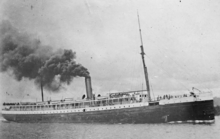
Henry Villard, president of the Oregon Railroad and Navigation Company, attended Edison's 1879 demonstration. Villard was impressed and requested Edison install his electric lighting system aboard Villard's company's new steamer, the Columbia. Although hesitant at first, Edison agreed to Villard's request. Most of the work was completed in May 1880, and the Columbia went to New York City, where Edison and his personnel installed Columbia's new lighting system. The Columbia was Edison's first commercial application for his incandescent light bulb. The Edison equipment was removed from Columbia in 1895.

Thomas Edison Early life Thomas as a boy Thomas Edison was born, in 1847, in Milan, Ohio, and grew up in Port Huron, Michigan. He was the seventh and last child of Samuel Ogden Edison Jr. (1804–1896, born in Marshalltown, Nova Scotia) and Nancy Matthews Elliott (1810–1871, born in Chenango County, New York). His father, the son of a Loyalist refugee, had moved as a boy with the family from Nova Scotia, settling in southwestern Ontario (then called Upper Canada), in a village known as Shewsbury, later Vienna, by 1811. Samuel Jr. eventually fled Ontario, because he took part in the unsuccessful Mackenzie Rebellion of 1837. His father, Samuel Sr., had earlier fought in the War of 1812 as captain of the First Middlesex Regiment. By contrast, Samuel Jr.'s struggle found him on the losing side, and he crossed into the United States at Sarnia-Port Huron. Once across the border, he found his way to Milan, Ohio. His patrilineal family line was Dutch by way of New Jersey; the surname had originally been "Edeson." thomas edison inventions, thomas edison quotes, thomas edison light bulb, thomas edison facts,thomas edison biography, thomas edison children, thomas edison education, thomas edison family, thomas alva edison jr, TMBM Nadim, The Science, the science all

The Oregon Railroad and Navigation Company's new steamship, the Columbia, was the first commercial application for Edison's incandescent light bulb in 1880.

Lewis Latimer joined the Edison Electric Light Company in 1884. Latimer had received a patent in January 1881 for the "Process of Manufacturing Carbons", an improved method for the production of carbon filaments for light bulbs. Latimer worked as an engineer, a draftsman and an expert witness in patent litigation on electric lights.

George Westinghouse's company bought Philip Diehl's competing induction lamp patent rights (1882) for $25,000, forcing the holders of the Edison patent to charge a more reasonable rate for the use of the Edison patent rights and lowering the price of the electric lamp.

Marriages and children

On December 25, 1871, at the age of twenty-four, Edison married 16-year-old Mary Stilwell (1855–1884), whom he had met two months earlier; she was an employee at one of his shops. They had three children:

Marion Estelle Edison (1873–1965), nicknamed "Dot"
Thomas Alva Edison Jr. (1876–1935), nicknamed "Dash"
William Leslie Edison (1878–1937) Inventor, graduate of the Sheffield Scientific School at Yale, 1900.
Mary Edison died at age 29 on August 9, 1884, of unknown causes: possibly from a brain tumor or a morphine overdose. Doctors frequently prescribed morphine to women in those years to treat a variety of causes, and researchers believe that her symptoms could have been from morphine poisoning.


Edison generally preferred spending time in the laboratory to being with his family.
Thomas Edison Early life Thomas as a boy Thomas Edison was born, in 1847, in Milan, Ohio, and grew up in Port Huron, Michigan. He was the seventh and last child of Samuel Ogden Edison Jr. (1804–1896, born in Marshalltown, Nova Scotia) and Nancy Matthews Elliott (1810–1871, born in Chenango County, New York). His father, the son of a Loyalist refugee, had moved as a boy with the family from Nova Scotia, settling in southwestern Ontario (then called Upper Canada), in a village known as Shewsbury, later Vienna, by 1811. Samuel Jr. eventually fled Ontario, because he took part in the unsuccessful Mackenzie Rebellion of 1837. His father, Samuel Sr., had earlier fought in the War of 1812 as captain of the First Middlesex Regiment. By contrast, Samuel Jr.'s struggle found him on the losing side, and he crossed into the United States at Sarnia-Port Huron. Once across the border, he found his way to Milan, Ohio. His patrilineal family line was Dutch by way of New Jersey; the surname had originally been "Edeson." thomas edison inventions, thomas edison quotes, thomas edison light bulb, thomas edison facts,thomas edison biography, thomas edison children, thomas edison education, thomas edison family, thomas alva edison jr, TMBM Nadim, The Science, the science all
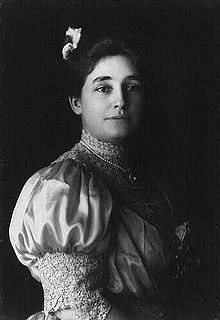
Mina Miller Edison in 1906


On February 24, 1886, at the age of thirty-nine, Edison married the 20-year-old Mina Miller (1865–1947) in Akron, Ohio. She was the daughter of the inventor Lewis Miller, co-founder of the Chautauqua Institution, and a benefactor of Methodist charities. They also had three children together:

Madeleine Edison (1888–1979), who married John Eyre Sloane.
Charles Edison (1890–1969), Governor of New Jersey (1941–1944), who took over his father's company and experimental laboratories upon his father's death.
Theodore Miller Edison (1898–1992), (MIT Physics 1923), credited with more than 80 patents.
Mina outlived Thomas Edison, dying on August 24, 1947.

Wanting to be an inventor, but not having much of an aptitude for it, Thomas Edison's son, Thomas Alva Edison Jr.. became a problem for his father and his father's business. Starting in the 1890s, Thomas Jr. became involved in snake oil products and shady and fraudulent enterprises producing products being sold to the public as "The Latest Edison Discovery". The situation became so bad that Thomas Sr. had to take his son to court to stop the practices, finally agreeing to pay Thomas Jr. an allowance of $35.00 (equivalent to $953 in 2017) per week, in exchange for not using the Edison name; the son began using aliases, such as Burton Willard. Thomas Jr., suffering from alcoholism, depression and ill health, worked at several menial jobs, but by 1931 (towards the end of his life) he would obtain a role in the Edison company, thanks to the intervention of his brother.

Awards


Portrait of Edison by Abraham Archibald Anderson (1890), National Portrait Gallery
The President of the Third French Republic, Jules Grévy, on the recommendation of his Minister of Foreign Affairs, Jules Barthélemy-Saint-Hilaire, and with the presentations of the Minister of Posts and Telegraphs, Louis Cochery, designated Edison with the distinction of an Officer of the Legion of Honour (Légion d'honneur) by decree on November 10, 1881; Edison was also named a Chevalier in the Legion in 1879, and a Commander in 1889.

In 1887, Edison won the Matteucci Medal. In 1890, he was elected a member of the Royal Swedish Academy of Sciences.

The Philadelphia City Council named Edison the recipient of the John Scott Medal in 1889.

In 1899, Edison was awarded the Edward Longstreth Medal of The Franklin Institute.

He was named an Honorable Consulting Engineer at the Louisiana Purchase Exposition World's fair in 1904.

In 1908, Edison received the American Association of Engineering Societies John Fritz Medal.

In 1915, Edison was awarded Franklin Medal of The Franklin Institute for discoveries contributing to the foundation of industries and the well-being of the human race.

In 1920, the United States Navy department awarded him the Navy Distinguished Service Medal.

In 1923, the American Institute of Electrical Engineers created the Edison Medal and he was its first recipient.

In 1927, he was granted membership in the National Academy of Sciences.

On May 29, 1928, Edison received the Congressional Gold Medal.

In 1983, the United States Congress, pursuant to Senate Joint Resolution 140 (Public Law 97—198), designated February 11, Edison's birthday, as National Inventor's Day.

Life magazine (USA), in a special double issue in 1997, placed Edison first in the list of the "100 Most Important People in the Last 1000 Years", noting that the light bulb he promoted "lit up the world". In the 2005 television series The Greatest American, he was voted by viewers as the fifteenth greatest.


In 2008, Edison was inducted in the New Jersey Hall of Fame.

In 2010, Edison was honored with a Technical Grammy Award.

In 2011, Edison was inducted into the Entrepreneur Walk of Fame and named a Great Floridian by the Florida Governor and Cabinet.

Collected: Wikipidea

Sir Issac Newton

galileo galilei, trinity college cambridge, gottfried wilhelm leibniz, isaac newton quotes philosophi naturalis principia mathematica, isaac newton facts, woolsthorpe manor, isaac newton education, opticks, isaac newton books, isaac newton gravity, sir isaac newton facts, what did isaac newton invent, isaac newton accomplishments, sir isaac newton quotes, the chronology of ancient kingdoms amended, isaac newton inventions, isaac newton education, sir isaac newton biography, isaac newton wikipedia, sir isaac newton facts, isaac newton death, isaac newton for kids, TMBM Nadim, The Science, The science all, the science 180, Scientist

Early life:

Isaac Newton was born (according to the Julian calendar, in use in England at the time) on Christmas Day, 25 December 1642 (NS 4 January 1643) "an hour or two after midnight", at wools Thorpe Manor in Wools Thorpe-by-Colsterworth, a hamlet in the county of Lincolnshire. His father, also named Isaac Newton, had died three months before. Born prematurely, Newton was a small child; his mother Hannah Ayscough reportedly said that he could have fit inside a quart mug. When Newton was three, his mother remarried and went to live with her new husband, the Reverend Barnabas Smith, leaving her son in the care of his maternal grandmother, Margery Ayscough. The young Isaac disliked his stepfather and maintained some enmity towards his mother for marrying him, as revealed by this entry in a list of sins committed up to the age of 19: "Threatening my father and mother Smith to burn them and the house over them." Newton's mother had three children from her second marriage.


From the age of about twelve until he was seventeen, Newton was educated at The King's School, Grantham, which taught Latin and Greek and probably imparted a significant foundation of mathematics. He was removed from school and returned to Woolsthorpe-by-Colsterworth by October 1659. His mother, widowed for the second time, attempted to make him a farmer, an occupation he hated. Henry Stokes, a master at the King's School, persuaded his mother to send him back to school. Motivated partly by a desire for revenge against a schoolyard bully, he became the top-ranked student, distinguishing himself mainly by building sundials and models of windmills.

In June 1661, he was admitted to Trinity College, Cambridge, on the recommendation of his uncle Rev William Ayscough, who had studied there. He started as a subsizar—paying his way by performing valet's duties—until he was awarded a scholarship in 1664, guaranteeing him four more years until he could get his MA. At that time, the college's teachings were based on those of Aristotle, whom Newton supplemented with modern philosophers such as Descartes, and astronomers such as Galileo and Thomas Street, through whom he learned of Kepler's work. He set down in his notebook a series of "Quaestiones" about mechanical philosophy as he found it. In 1665, he discovered the generalized binomial theorem and began to develop a mathematical theory that later became calculus. Soon after Newton had obtained his BA degree in August 1665, the university temporarily closed as a precaution against the Great Plague. Although he had been undistinguished as a Cambridge student, Newton's private studies at his home in Woolsthorpe over the subsequent two years saw the development of his theories on calculus, optics, and the law of gravitation.


In April 1667, he returned to Cambridge and in October was elected as a fellow of Trinity. Fellows were required to become ordained priests, although this was not enforced in the restoration years and an assertion of conformity to the Church of England was sufficient. However, by 1675 the issue could not be avoided and by then his unconventional views stood in the way. Nevertheless, Newton managed to avoid it by means of special permission from Charles II (see "Middle years" section below).

His studies had impressed the Lucasian professor Isaac Barrow, who was more anxious to develop his own religious and administrative potential (he became master of Trinity two years later); in 1669 Newton succeeded him, only one year after receiving his MA. He was elected a Fellow of the Royal Society (FRS) in 1672.

Middle years:

Mathematics

Isaac Newton (Bolton, Sarah K. Famous Men of Science. NY: Thomas Y. Crowell & Co., 1889)
Newton's work has been said, "to distinctly advance every branch of mathematics then studied". His work on the subject usually referred to as fluxions or calculus, seen in a manuscript of October 1666, is now published among Newton's mathematical papers.[21] The author of the manuscript De analysis per aequationes numero terminorum infinitas, sent by Isaac Barrow to John Collins in June 1669, was identified by Barrow in a letter sent to Collins in August of that year as:[22]

Mr. Newton, a fellow of our College, and very young ... but of an extraordinary genius and proficiency in these things.

Newton later became involved in a dispute with Leibniz over priority in the development of calculus (the Leibniz–Newton calculus controversy). Most modern historians believe that Newton and Leibniz developed calculus independently, although with very different notations. Occasionally it has been suggested that Newton published almost nothing about it until 1693, and did not give a full account until 1704, while Leibniz began publishing a full account of his methods in 1684. (Leibniz's notation and "differential Method", nowadays recognized as much more convenient notations, were adopted by continental European mathematicians, and after 1820 or so, also by British mathematicians.) But such a suggestion fails to account for the content of calculus in Book 1 of Newton's Principia itself (published 1687) and in its forerunner manuscripts, such as De Motu corporum in gyrum ("On the motion of bodies in orbit") of 1684; this content has been pointed out by critics of both Newton's time and modern times. The Principia is not written in the language of calculus either as we know it or as Newton's (later) 'dot' notation would write it. His work extensively uses calculus in geometric form based on limiting values of the ratios of vanishing small quantities: in the Principia itself, Newton gave demonstration of this under the name of 'the method of first and last ratios' and explained why he put his expositions in this form, remarking also that 'hereby the same thing is performed as by the method of indivisibles'.


Because of this, the Principia has been called "a book dense with the theory and application of the infinitesimal calculus" in modern times and " lequel est Presque tout de ce calcul" ('nearly all of it is of this calculus') in Newton's time. His use of methods involving "one or more orders of the infinitesimally small" is present in his De Motu corporum in gyrum of 1684[27] and in his papers on motion "during the two decades preceding 1684".

Newton in a 1702 portrait by Godfrey Kneller
Newton had been reluctant to publish his calculus because he feared controversy and criticism. He was close to the Swiss mathematician Nicolas Fatio de Duillier. In 1691, Duillier started to write a new version of Newton's Principia, and corresponded with Leibniz. In 1693, the relationship between Duillier and Newton deteriorated and the book was never completed.

Starting in 1699, other members of the Royal Society (of which Newton was a member) accused Leibniz of plagiarism. The dispute then broke out in full force in 1711 when the Royal Society proclaimed in a study that it was Newton who was the true discoverer and labelled Leibniz a fraud. This study was cast into doubt when it was later found that Newton himself wrote the study's concluding remarks on Leibniz. Thus began the bitter controversy which marred the lives of both Newton and Leibniz until the latter's death in 1716.

Newton is generally credited with the generalized binomial theorem, valid for any exponent. He discovered Newton's identities, Newton's method, classified cubic plane curves (polynomials of degree three in two variables), made substantial contributions to the theory of finite differences, and was the first to use fractional indices and to employ coordinate geometry to derive solutions to Diophantine equations. He approximated partial sums of the harmonic series by logarithms (a precursor to Euler's summation formula) and was the first to use power series with confidence and to revert power series. Newton's work on infinite series was inspired by Simon Stevin's decimals.


When Newton received his MA and became a Fellow of the "College of the Holy and Undivided Trinity" in 1667, he made the commitment that "I will either set Theology as the object of my studies and will take holy orders when the time prescribed by these statutes [7 years] arrives, or I will resign from the college." Up till this point he had not thought much about religion and had twice signed his agreement to the thirty-nine articles, the basis of Church of England doctrine.

He was appointed Lucian Professor of Mathematics in 1669 on Barrow's recommendation. During that time, any Fellow of a college at Cambridge or Oxford was required to take holy orders and become an ordained Anglican priest. However, the terms of the Lucian professorship required that the holder not be active in the church (presumably so as to have more time for science). Newton argued that this should exempt him from the ordination requirement, and Charles II, whose permission was needed, accepted this argument. Thus a conflict between Newton's religious views and Anglican orthodoxy was averted.

Optics:

Replica of Newton's second reflecting telescope, which he presented to the Royal Society in 1672
In 1666, Newton observed that the spectrum of colors exiting a prism in the position of minimum deviation is oblong, even when the light ray entering the prism is circular, which is to say, the prism refracts different colors by different angles. This led him to conclude that color is a property intrinsic to light—a point which had been debated in prior years.

From 1670 to 1672, Newton lectured on optics. During this period he investigated the refraction of light, demonstrating that the multicolored spectrum produced by a prism could be recomposed into white light by a lens and a second prism. Modern scholarship has revealed that Newton's analysis and re synthesize of white light owes a debt to corpuscular alchemy.

He showed that colored light does not change its properties by separating out a colored beam and shining it on various objects, and that regardless of whether reflected, scattered, or transmitted, the light remains the same color. Thus, he observed that color is the result of objects interacting with already-colored light rather than objects generating the color themselves. This is known as Newton's theory of color.

Illustration of a dispersion prism separating white light into the colors of the spectrum, as discovered by Newton
From this work, he concluded that the lens of any refracting telescope would suffer from the dispersion of light into colors (chromatic aberration). As a proof of the concept, he constructed a telescope using reflective mirrors instead of lenses as the objective to bypass that problem. Building the design, the first known functional reflecting telescope, today known as a Newtonian telescope, involved solving the problem of a suitable mirror material and shaping technique. Newton ground his own mirrors out of a custom composition of highly reflective speculum metal, using Newton's rings to judge the quality of the optics for his telescopes. In late 1668 he was able to produce this first reflecting telescope. It was about eight inches long and it gave a clearer and larger image. In 1671, the Royal Society asked for a demonstration of his reflecting telescope. Their interest encouraged him to publish his notes, Of Colors, which he later expanded into the work Optics. When Robert Hooke criticized some of Newton's ideas, Newton was so offended that he withdrew from public debate. Newton and Hooke had brief exchanges in 1679–80, when Hooke, appointed to manage the Royal Society's correspondence, opened up a correspondence intended to elicit contributions from Newton to Royal Society transactions, which had the effect of stimulating Newton to work out a proof that the elliptical form of planetary orbits would result from a centripetal force inversely proportional to the square of the radius vector (see Newton's law of universal gravitation – History and De motu corporum in gyrum). But the two men remained generally on poor terms until Hooke's death.


Facsimile of a 1682 letter from Isaac Newton to Dr. William Briggs, commenting on Briggs' "A New Theory of Vision"
Newton argued that light is composed of particles or corpuscles, which were refracted by accelerating into a denser medium. He verged on sound like waves to explain the repeated pattern of reflection and transmission by thin films (Optics Bk.II, Props. 12), but still retained his theory of 'fits' that disposed corpuscles to be reflected or transmitted (Props.13). However, later physicists favored a purely wavelike explanation of light to account for the interference patterns and the general phenomenon of diffraction. Today's quantum mechanics, photons, and the idea of wave–particle duality bear only a minor resemblance to Newton's understanding of light.

In his Hypothesis of Light of 1675, Newton posited the existence of the ether to transmit forces between particles. The contact with the theosophist Henry More, revived his interest in alchemy. He replaced the ether with occult forces based on Hermetic ideas of attraction and repulsion between particles. John Maynard Keynes, who acquired many of Newton's writings on alchemy, stated that "Newton was not the first of the age of reason: He was the last of the magicians." Newton's interest in alchemy cannot be isolated from his contributions to science. This was at a time when there was no clear distinction between alchemy and science. Had he not relied on the occult idea of action at a distance, across a vacuum, he might not have developed his theory of gravity. (See also Isaac Newton's occult studies.)

In 1704, Newton published Optics, in which he expounded his corpuscular theory of light. He considered light to be made up of extremely subtle corpuscles, that ordinary matter was made of grosser corpuscles and speculated that through a kind of alchemical transmutation "Are not gross Bodies and Light convertible into one another, ... and may not Bodies receive much of their Activity from the Particles of Light which enter their Composition?" Newton also constructed a primitive form of a frictional electrostatic generator, using a glass globe.

In an article entitled "Newton, prisms, and the 'optics' of tunable lasers" it is indicated that Newton in his book Optics was the first to show a diagram using a prism as a beam expander. In the same book he describes, via diagrams, the use of multiple-prism arrays. Some 278 years after Newton's discussion, multiple-prism beam expanders became central to the development of narrow-linewidth tunable lasers. Also, the use of these prismatic beam expanders led to the multiple-prism dispersion theory.

Subsequent to Newton, much has been amended. Young and Fresnel combined Newton's particle theory with Huygens' wave theory to show that color is the visible manifestation of light's wavelength. Science also slowly came to realize the difference between perception of color and mathematical optics. The German poet and scientist, Goethe, could not shake the Newtonian foundation but "one hole Goethe did find in Newton's armor, Newton had committed himself to the doctrine that refraction without color was impossible. He therefore thought that the object-glasses of telescopes must forever remain imperfect, achromatism and refraction being incompatible. This inference was proved by Dollond to be wrong."

Mechanics and gravitation:

Further information: Writing of Principia Mathematica


Newton's own copy of his Principia, with hand-written corrections for the second edition
In 1679, Newton returned to his work on celestial mechanics by considering gravitation and its effect on the orbits of planets with reference to Kepler's laws of planetary motion. This followed stimulation by a brief exchange of letters in 1679–80 with Hooke, who had been appointed to manage the Royal Society's correspondence, and who opened a correspondence intended to elicit contributions from Newton to Royal Society transactions. Newton's reawakening interest in astronomical matters received further stimulus by the appearance of a comet in the winter of 1680–1681, on which he corresponded with John Flamsteed. After the exchanges with Hooke, Newton worked out proof that the elliptical form of planetary orbits would result from a centripetal force inversely proportional to the square of the radius vector (see Newton's law of universal gravitation – History and De motu corporum in gyrum). Newton communicated his results to Edmond Halley and to the Royal Society in De motu corporum in gyrum, a tract written on about nine sheets which was copied into the Royal Society's Register Book in December 1684. This tract contained the nucleus that Newton developed and expanded to form the Principia.

The Principia was published on 5 July 1687 with encouragement and financial help from Edmond Halley. In this work, Newton stated the three universal laws of motion. Together, these laws describe the relationship between any object, the forces acting upon it and the resulting motion, laying the foundation for classical mechanics. They contributed to many advances during the Industrial Revolution which soon followed and were not improved upon for more than 200 years. Many of these advancements continue to be the underpinnings of non-relativistic technologies in the modern world. He used the Latin word gravitas (weight) for the effect that would become known as gravity, and defined the law of universal gravitation.

In the same work, Newton presented a calculus-like method of geometrical analysis using 'first and last ratios', gave the first analytical determination (based on Boyle's law) of the speed of sound in air, inferred the oblateness of Earth's spheroidal figure, accounted for the precession of the equinoxes as a result of the Moon's gravitational attraction on the Earth's oblations, initiated the gravitational study of the irregularities in the motion of the moon, provided a theory for the determination of the orbits of comets, and much more.[citation needed]

Newton made clear his heliocentric view of the Solar System—developed in a somewhat modern way, because already in the mid-1680s he recognized the "deviation of the Sun" from the center of gravity of the Solar System. For Newton, it was not precisely the center of the Sun or any other body that could be considered at rest, but rather "the common center of gravity of the Earth, the Sun and all the Planets is to be esteemed the Centre of the World", and this center of gravity "either is at rest or moves uniformly forward in a right line" (Newton adopted the "at rest" alternative in view of common consent that the center, wherever it was, was at rest).

Newton's postulate of an invisible force able to act over vast distances led to him being criticized for introducing "occult agencies" into science. Later, in the second edition of the Principia (1713), Newton firmly rejected such criticisms in a concluding General Scholium, writing that it was enough that the phenomena implied a gravitational attraction, as they did; but they did not so far indicate its cause, and it was both unnecessary and improper to frame hypotheses of things that were not implied by the phenomena. (Here Newton used what became his famous expression "hypotheses non-fingo").

With the Principia, Newton became internationally recognized. He acquired a circle of admirers, including the Swiss-born mathematician Nicolas Fatio de Duillier.

Classification of cubics
Main article: Cubic plane curve
Newton found 72 of the 78 "species" of cubic curves and categorized them into four types.  In 1717, and probably with Newton's help, James Stirling proved that every cubic was one of these four types. Newton also claimed that the four types could be obtained by plane projection from one of them, and this was proved in 1731, four years after his death.


Later life:

Main article: Later life of Isaac Newton
In the 1690s, Newton wrote a number of religious tracts dealing with the literal and symbolic interpretation of the Bible. A manuscript Newton sent to John Locke in which he disputed the fidelity of 1 John 5:7 and its fidelity to the original manuscripts of the New Testament, remained unpublished until 1785.

Even though a number of authors have claimed that the work might have been an indication that Newton disputed the belief in Trinity, others assure that Newton did question the passage but never denied Trinity as such. His biographer, scientist Sir David Brewster, who compiled his manuscripts for over 20 years, wrote about the controversy in well-known book Memoirs of the Life, Writings, and Discoveries of Sir Isaac Newton, where he explains that Newton questioned the veracity of those passages, but he never denied the doctrine of Trinity as such. Brewster states that Newton was never known as an Arian during his lifetime, it was first William Whiston (an Arian) who argued that "Sir Isaac Newton was so hearty for the Baptists, as well as for the Eusebians or Arians, that he sometimes suspected these two were the two witnesses in the Revelations," while other like Hopton Haynes (a Mint employee and Humanitarian), "mentioned to Richard Baron, that Newton held the same doctrine as himself".[66] Brewster's views are, however, severely outdated, encrypted manuscripts written by Newton have been bought by John Maynard Keynes (among others), then deciphered[50] and it became known that Newton has rejected Trinidadians.


Isaac Newton in old age in 1712, portrait by Sir James Thorn hill
Later works—The Chronology of Ancient Kingdoms Amended (1728) and Observations upon the Prophecies of Daniel and the Apocalypse of St. John (1733)—were published after his death. He also devoted a great deal of time to alchemy (see above).

Newton was also a member of the Parliament of England for Cambridge University in 1689–90 and 1701–2, but according to some accounts his only comments were to complain about a cold draught in the chamber and request that the window be closed. He was however noted by Cambridge diarist Abraham de la Prime as having rebuked students who were frightening local residents by claiming that a house was haunted.

Newton moved to London to take up the post of warden of the Royal Mint in 1696, a position that he had obtained through the patronage of Charles Montagu, 1st Earl of Halifax, and then Chancellor of the Exchequer. He took charge of England's great re coining, somewhat treading on the toes of Lord Lucas, Governor of the Tower (and securing the job of deputy comptroller of the temporary Chester branch for Edmond Halley). Newton became perhaps the best-known Master of the Mint upon the death of Thomas Neale in 1699, a position Newton held for the last 30 years of his life. These appointments were intended as sinecures, but Newton took them seriously, retiring from his Cambridge duties in 1701, and exercising his power to reform the currency and punish clippers and counterfeiters.

As Warden, and after wards Master, of the Royal Mint, Newton estimated that 20 percent of the coins taken in during the Great Re coinage of 1696 were counterfeit. Counterfeiting was high treason, punishable by the felon being hanged, drawn and quartered. Despite this, convicting even the most flagrant criminals could be extremely difficult. However, Newton proved equal to the task.

Disguised as a habitue of bars and taverns, he gathered much of that evidence himself. For all the barriers placed to prosecution, and separating the branches of government, English law still had ancient and formidable customs of authority. Newton had himself made a justice of the peace in all the Home Counties—there is a draft of a letter regarding this matter stuck into Newton's personal first edition of his Philosophiæ Naturalis Principia Mathematica which he must have been amending at the time. Then he conducted more than 100 cross-examinations of witnesses, informers, and suspects between June 1698 and Christmas 1699. Newton successfully prosecuted 28 coiners.


Coat of arms of the Newton family of Gunner by, Lincolnshire, afterwards used by Sir Isaac
As a result of a report written by Newton on 21 September 1717 to the Lords Commissioners of His Majesty's Treasury the bimetallic relationship between gold coins and silver coins was changed by Royal proclamation on 22 December 1717, forbidding the exchange of gold guineas for more than 21 silver shillings. This inadvertently resulted in a silver shortage as silver coins were used to pay for imports, while exports were paid for in gold, effectively moving Britain from the silver standard to its first gold standard. It is a matter of debate as whether he intended to do this or not. It has been argued that Newton conceived of his work at the Mint as a continuation of his alchemical work.

Newton was made President of the Royal Society in 1703 and an associate of the French Académie des Sciences. In his position at the Royal Society, Newton made an enemy of John Flamsteed, the Astronomer Royal, by prematurely publishing Flam steed’s Historia Coelestis Britannica, which Newton had used in his studies.

In April 1705, Queen Anne knighted Newton during a royal visit to Trinity College, Cambridge. The knighthood is likely to have been motivated by political considerations connected with the Parliamentary election in May 1705, rather than any recognition of Newton's scientific work or services as Master of the Mint. Newton was the second scientist to be knighted, after Sir Francis Bacon.

Newton was one of many people who lost heavily when the South Sea Company collapsed. Their most significant trade was slaves, and according to his niece, he lost around £20,000.

Towards the end of his life, Newton took up residence at Cranbury Park, near Winchester with his niece and her husband, until his death in 1727.[90] His half-niece, Catherine Barton Conduitt, served as his hostess in social affairs at his house on Jermyn Street in London; he was her "very loving Uncle", according to his letter to her when she was recovering from smallpox.

Death:

Newton died in his sleep in London on 20 March 1727 (OS 20 March 1726; NS 31 March 1727). His body was buried in Westminster Abbey.[93] Voltaire may have been present at his funeral. A bachelor, he had divested much of his estate to relatives during his last years, and died intestate. His papers went to John Conduitt and Catherine Barton. After his death, Newton's hair was examined and found to contain mercury, probably resulting from his alchemical pursuits. Mercury poisoning could explain Newton's eccentricity in late life.

Personal relations
Although it was claimed that he was once engaged, Newton never married. The French writer and philosopher Voltaire, who was in London at the time of Newton's funeral, said that he "was never sensible to any passion, was not subject to the common frailties of mankind, nor had any commerce with women—a circumstance which was assured me by the physician and surgeon who attended him in his last moments". The widespread belief that he died a virgin has been commented on by writers such as mathematician Charles Hutton,[99] economist John Maynard Keynes, and physicist Carl Sagan.

Newton did have a close friendship with the Swiss mathematician Nicolas Fatio de Duillier, whom he met in London around 1689. Their relationship came to an abrupt and unexplained end in 1693, and at the same time Newton suffered a nervous breakdown. Some of their correspondence has survived.

In September of that year, Newton had a breakdown which included sending wild accusatory letters to his friends Samuel Pepys and John Locke. His note to the latter included the charge that Locke "endeavoured to embroil me with women".

Collected from: Wikipedia


Albert Einstein

Born: March 14, 1879 


Ulm, Germany 
Died: April 18, 1955 
Princeton, Massachusetts 

German-born American physicist and scientist

The German-born American physicist (one who studies matter and energy and the relationships between them) Albert Einstein revolutionized the science of physics. He is best known for his theory of relativity, which holds that measurements of space and time vary according to conditions such as the state of motion of the observer.


Early years and education:


Einstein at the age of 3 in 1882

Albert Einstein in 1893 (age 14)

Albert Einstein was born on March 14, 1879, in Ulm, Germany, but he grew up and obtained his early education in Munich, Germany. He was a poor student, and some of his teachers thought he might be retarded (mentally handicapped); he was unable to speak fluently (with ease and grace) at age nine. Still, he was fascinated by the laws of nature, experiencing a deep feeling of wonder when puzzling over the invisible, yet real, force directing the needle of a compass. He began playing the violin at age six and would continue to play throughout his life. At age twelve he discovered geometry (the study of points, lines, and surfaces) and was taken by its clear and certain proofs. Einstein mastered calculus (a form of higher mathematics used to solve problems in physics and engineering) by age sixteen.


Einstein's formal secondary education ended at age sixteen. He disliked school, and just as he was planning to find a way to leave without hurting his chances for entering the university, his teacher expelled him because his bad attitude was affecting his classmates. Einstein tried to enter the Federal Institute of Technology (FIT) in Zurich, Switzerland, but his knowledge of subjects other than mathematics was not up to par, and he failed the entrance examination. On the advice of the principal, he first obtained his diploma at the Cantonal School in Aarau, Switzerland, and in 1896 he was automatically admitted into the FIT. There he came to realize that he was more interested in and better suited for physics than mathematics.

Einstein passed his examination to graduate from the FIT in 1900, but due to the opposition of one of his professors, he was unable to go on to obtain the usual university assistantship. In 1902 he was hired as an inspector in the patent office in Bern, Switzerland. Six months later he married Mileva Maric, a former classmate in Zurich. They had two sons. It was in Bern, too, that Einstein, at twenty-six, completed the requirements for his doctoral degree and wrote the first of his revolutionary scientific papers.

Famous papers:


Thermodynamics (the study of heat processes) made the deepest impression on Einstein. From 1902 until 1904 he reworked the foundations of thermodynamics and statistical mechanics (the study of forces and their effect on the matter); this work formed the immediate background to his revolutionary papers of 1905, one of which was on Brownian motion.

In Brownian motion, first observed in 1827 by the Scottish botanist (a scientist who studies plants) Robert Brown (1773–1858), small particles suspended in a liquid such as water undergo a rapid, irregular motion. Einstein, unaware of Brown's earlier observations, concluded from his studies that such a motion must exist. He was guided by the thought that if the liquid in which the particles are suspended is made up of atoms, they should collide with the particles and set them into motion. He found that the motion of the particles will in time experience a forward movement. Einstein proved that this forward movement is directly related to the number of atoms per gram of atomic weight. Brownian motion is to this day considered one of the most direct proofs of the existence of atoms.

Another of Einstein's ideas in 1905 was that under certain conditions radiant energy (light) behaves as if it is made up not of waves but of particles of energy. He presented an equation for the photoelectric effect, in which electrons (particles in the outer portion of an atom that are said to have a "negative" electrical charge equal to that of protons, particles with a larger mass that are said to have a "positive" electrical charge) are ejected from a metal surface that has been exposed to light. Einstein proved that the electrons are not ejected in a constant stream but like bullets from a gun, in units, or "quanta." Although Einstein's famous equation for the photoelectric effect—for which he won the Nobel Prize in physics in 1921—appears obvious today, it was an extremely bold prediction in 1905. Not until years later did R. A. Millikan finally succeed in confirming it to everyone's everyone's satisfaction.

The theory of relativity came from Einstein's search for a general law of nature that would explain a problem that had occurred to him when he was sixteen: if one runs at, say, 4 4 miles per hour (6.4 kilometers per hour) alongside a train that is moving at 4 4 miles per hour, the train appears to be at rest; if, on the other hand, it were possible to run alongside a ray of light, neither experiment nor theory suggests that the ray of light would appear to be at rest. Einstein realized that no matter what speed the observer is moving at, he must always observe the same velocity of light, which is roughly 186,000 miles per second (299,274 kilometers per second). He also saw that this was in agreement with a second assumption: if an observer at rest and an observer moving at constant speed carry out the same kind of experiment, they must get the same result. These two assumptions make up Einstein's special theory of relativity. Also in 1905 Einstein proved that his theory predicted that energy (E) and mass (m) are entirely related according to his famous equation, E=mc 2. This means that the energy in any particle is equal to the particle's mass multiplied by the speed of light squared.


Academic career:

These papers made Einstein famous, and universities soon began competing for his services. In 1909, after serving as a lecturer at the University of Bern, Einstein was called as an associate professor to the University of Zurich. Two years later he was appointed a full professor at the German University in Prague, Czechoslovakia. Within another year-and-a-half, Einstein became a full professor at the FIT. Finally, in 1913 the well-known scientists Max Planck (1858–1947) and Walther Nernst (1864–1941) traveled to Zurich to persuade Einstein to accept a lucrative (profitable) research professorship at the University of Berlin in Germany, as well as full membership in the Prussian Academy of Science. He accepted their offer in 1914, saying, "The Germans are gambling on me as they would on a prize hen. I do not really know myself whether I shall ever really lay another egg." When he went to Berlin, his wife remained behind in Zurich with their two sons; they divorced, and Einstein married his cousin Elsa in 1917.

In 1920 Einstein was appointed to a lifelong honorary visiting professorship at the University of Leiden in Holland. In 1921 and 1922 Einstein, accompanied by Chaim Weizmann (1874–1952), the future president of the state of Israel, traveled all over the world to win support for the cause of Zionism (the establishing of an independent Jewish state). In Germany, where hatred of Jewish people was growing, the attacks on Einstein began. Philipp Lenard and Johannes Stark, both Nobel Prize-winning physicists, began referring to Einstein's theory of relativity as "Jewish physics." These kinds of attacks increased until Einstein resigned from the Prussian Academy of Science in 1933.


Career in America:

On several occasions, Einstein had visited the California Institute of Technology, and on his last trip to the United States, he was offered a position in the newly established Institute for Advanced Studies in Princeton, Massachusetts. He went there in 1933.

Einstein played a key role (1939) in the construction of the atomic bomb by signing a famous letter to President Franklin D. Roosevelt (1882–1945). It said that the Germans had made scientific advances and that it was possible that Adolf Hitler (1889–1945, the German leader whose actions led to World War II [1939–45]), might become the first to have atomic weapons. This led to an all-out U.S. effort to construct such a bomb. Einstein was deeply shocked and saddened when his famous equation E=mc 2 was finally demonstrated most awesomely and terrifyingly by using the bomb to destroy Hiroshima, Japan, in 1945. For a long time, he could only utter "Horrible, horrible."


It would be difficult to find a more suitable epitaph (a brief statement summing up a person's person's life) than the words Einstein himself used in describing his life: "God …gave me the stubbornness of a mule and nothing else; really …He also gave me a keen scent." On April 18, 1955, Einstein died in Princeton.

Collected from: Wikipedia